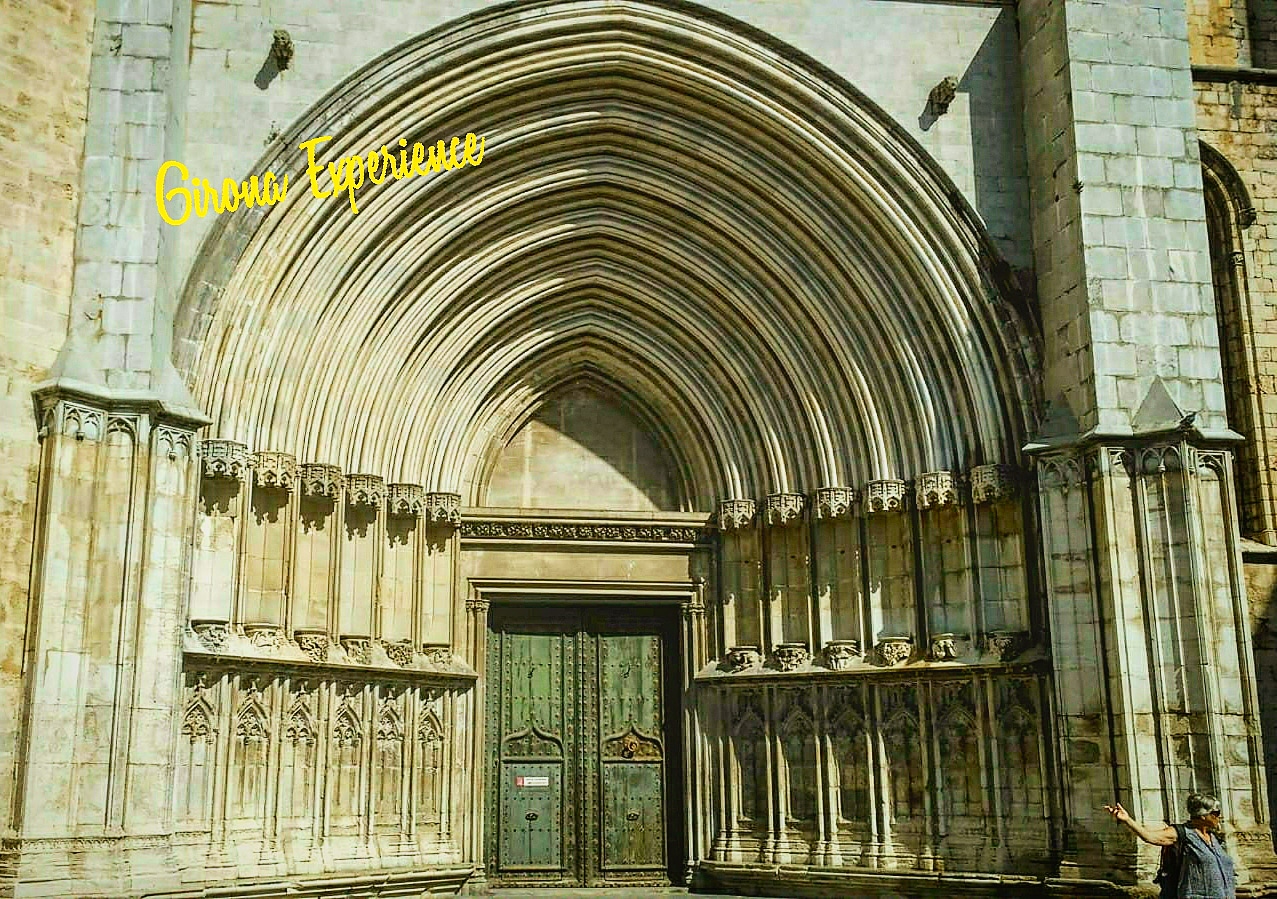
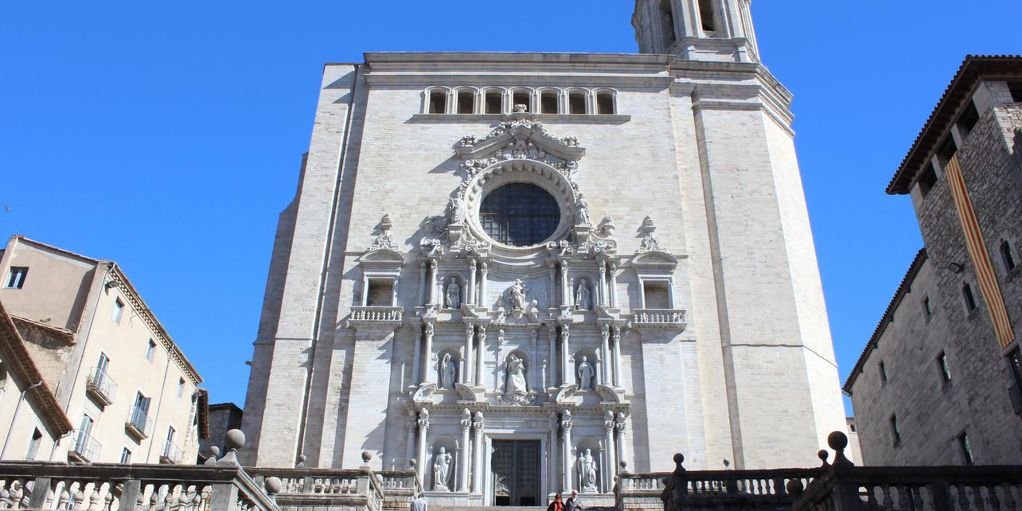
If you come to Girona, you can’t leave without visiting what is perhaps the city’s most important symbol. This monument is a unique construction, as it preserves the widest Gothic nave in the world.
Built over the course of seven centuries, the Cathedral blends three different architectural styles in chronological order: Romanesque, Gothic, and Baroque. It consists of three main areas open to visitors: the nave, the cloister, and the Treasury Room, which houses the museum. There you can find unique pieces such as the Tapestry of the Creation and the Beatus.
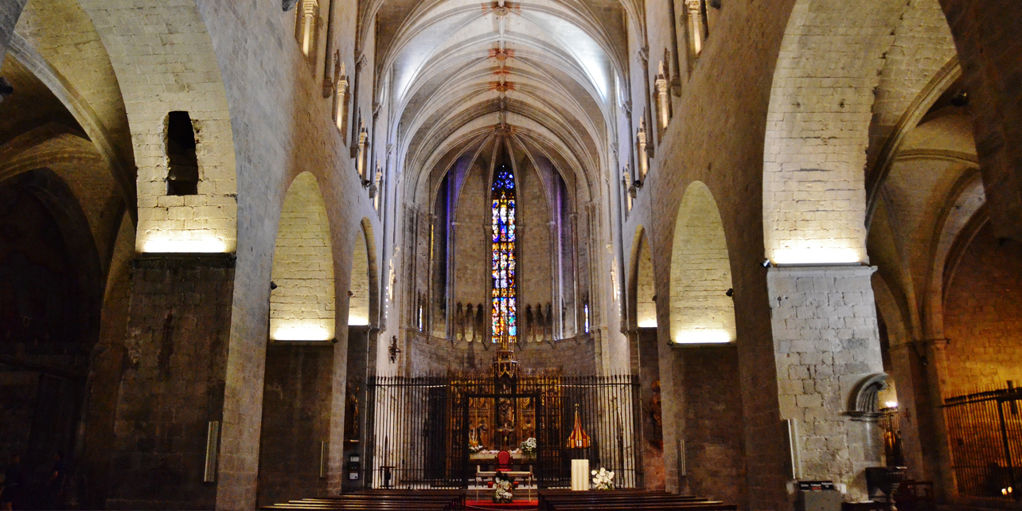
This monument is older than the current Girona Cathedral, although its construction took place over several centuries. It was the first Christian temple in Girona, and its origins date back to the 4th century AD, when a martyrium was built to venerate Girona’s first martyr, Saint Felix.
Saint Felix was one of the first Christians to arrive in the area and the main promoter of the Christian faith in the city. Much of the present-day church is built in Gothic style, although it also preserves Baroque and Romanesque elements.
Most visitors see the church as their visit is included in the price of admission to Girona Cathedral.
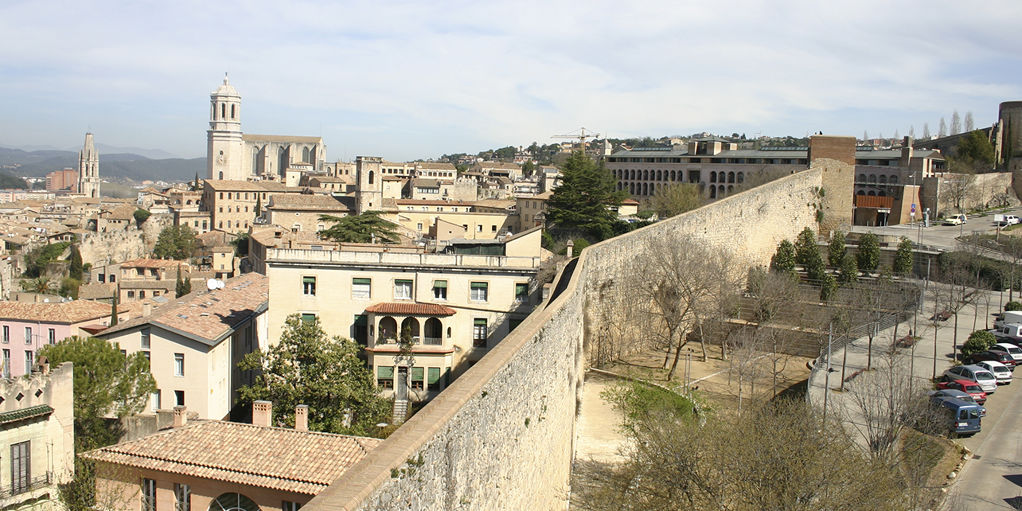
Considered one of the longest and best-preserved city walls in Europe, this monument is one of the main attractions of the city.
In Girona, there are three types of walls. The oldest are of Roman origin, while the later ones were built by the Franks and the people of Girona during the medieval period, in order to defend the city against possible invasions.
Besides offering an important viewpoint, walking the entire length of the walls is an essential experience during your visit. What’s more, access to the site is free!
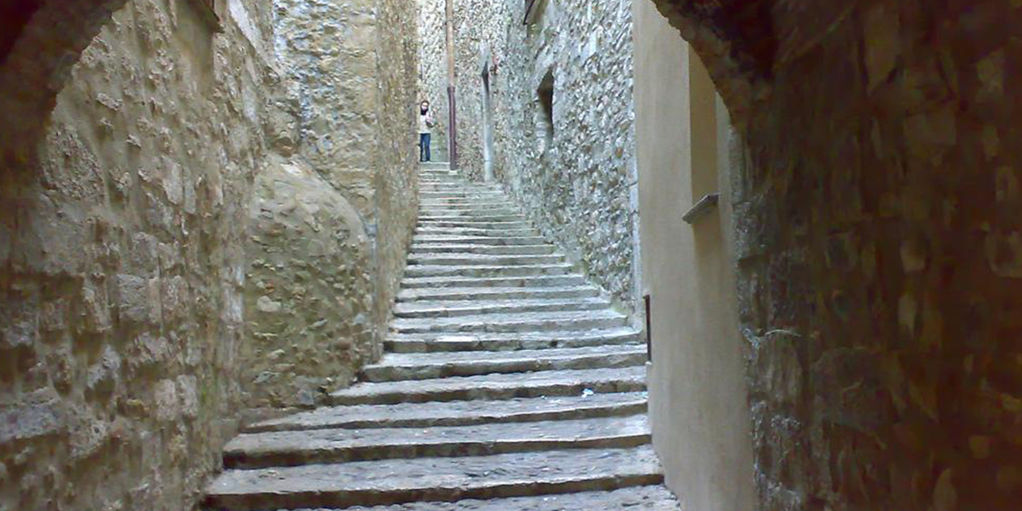
Site of cultural or historical interest – Historic ensemble
An old Jewish quarter that forms part of the historic center of the city. It was inhabited by Girona’s Jewish community between the 12th and 15th centuries. One of its former synagogues now houses a museum dedicated to the history of the Jewish people.
El Call (the Jewish Quarter) is one of the most emblematic and interesting areas of the city of Girona, both architecturally and historically. It is part of the old town, next to the banks of the Onyar River. Its origins date back to the 12th century, and it is one of the best-preserved Jewish quarters in Europe. It was inhabited by the city’s Jewish community until 1492, the year in which Jews were expelled from the country.
It consists of a labyrinth of narrow alleyways, solid stone houses, stairways, arches, and courtyards. One of its main buildings is the Bonastruc ça Porta Centre, located in what was the city’s last synagogue, and home to the Museum of Jewish History and the Nahmanides Institute of Studies (Museum of Jewish History and Nahmanides Institute of Studies).
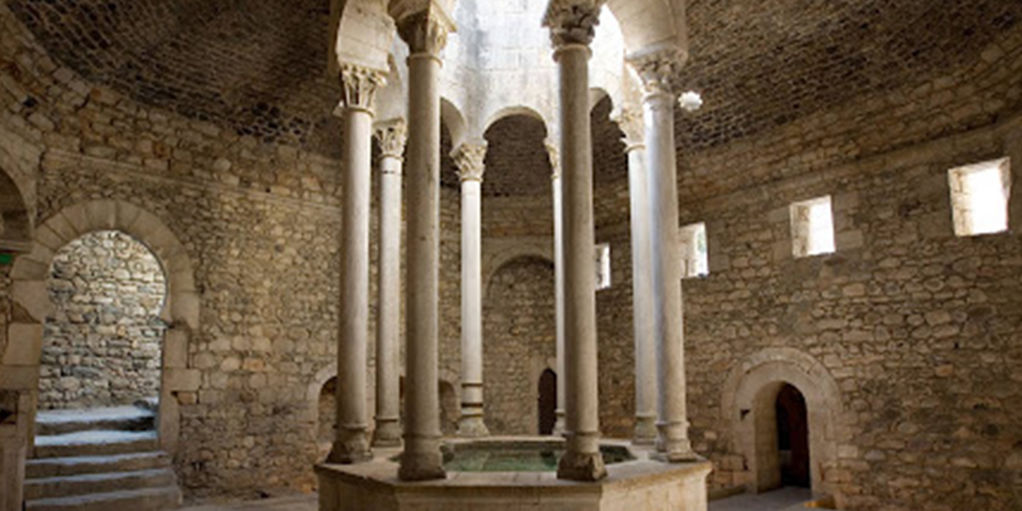
Although the name may lead to misunderstandings, this monument does not actually originate from the period of Muslim occupation in Girona during the 8th century.
These public baths, built in Romanesque style throughout the 12th century, were inspired by Roman thermae, and their aesthetics are influenced by the Arab baths that existed in Al-Andalus and North Africa.
This complex is located very close to Girona Cathedral and consists of three small bathing rooms and a changing room. They are a magnificent example of Romanesque art in Girona.
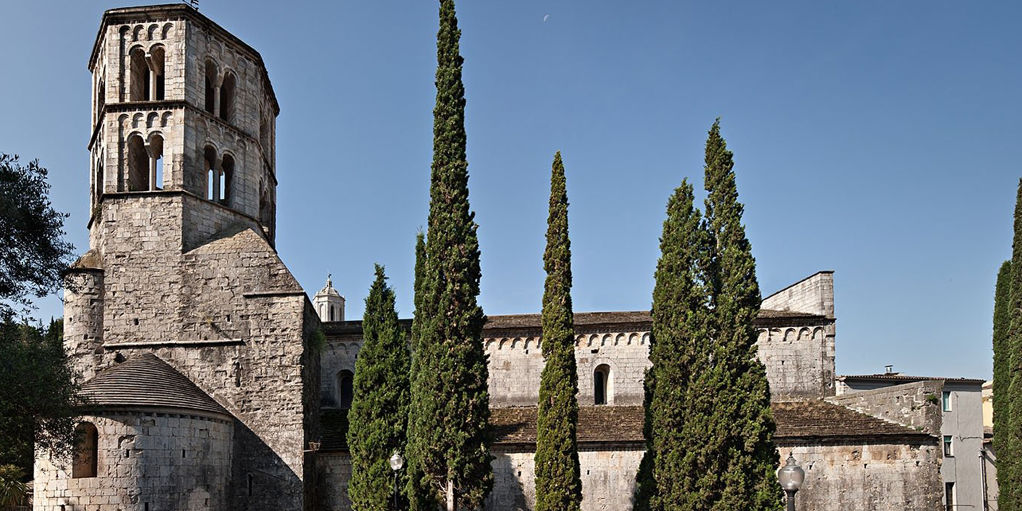
In Girona, we have some of the most important and oldest monasteries in Catalonia. Although some of them have disappeared, the Monastery of Sant Pere de Galligants, dating from the 11th century and built in Romanesque style, is still preserved and now houses the Girona branch of the Museum of Archaeology of Catalonia.
About ten minutes from the old town, in the valley of the same name, lies the Monastery of Sant Daniel, where six Benedictine nuns still live today.
In addition to monasteries, Girona also has numerous convents, some of which were expropriated in the 19th century and are now used as schools, university buildings, or hospitals, among other purposes.