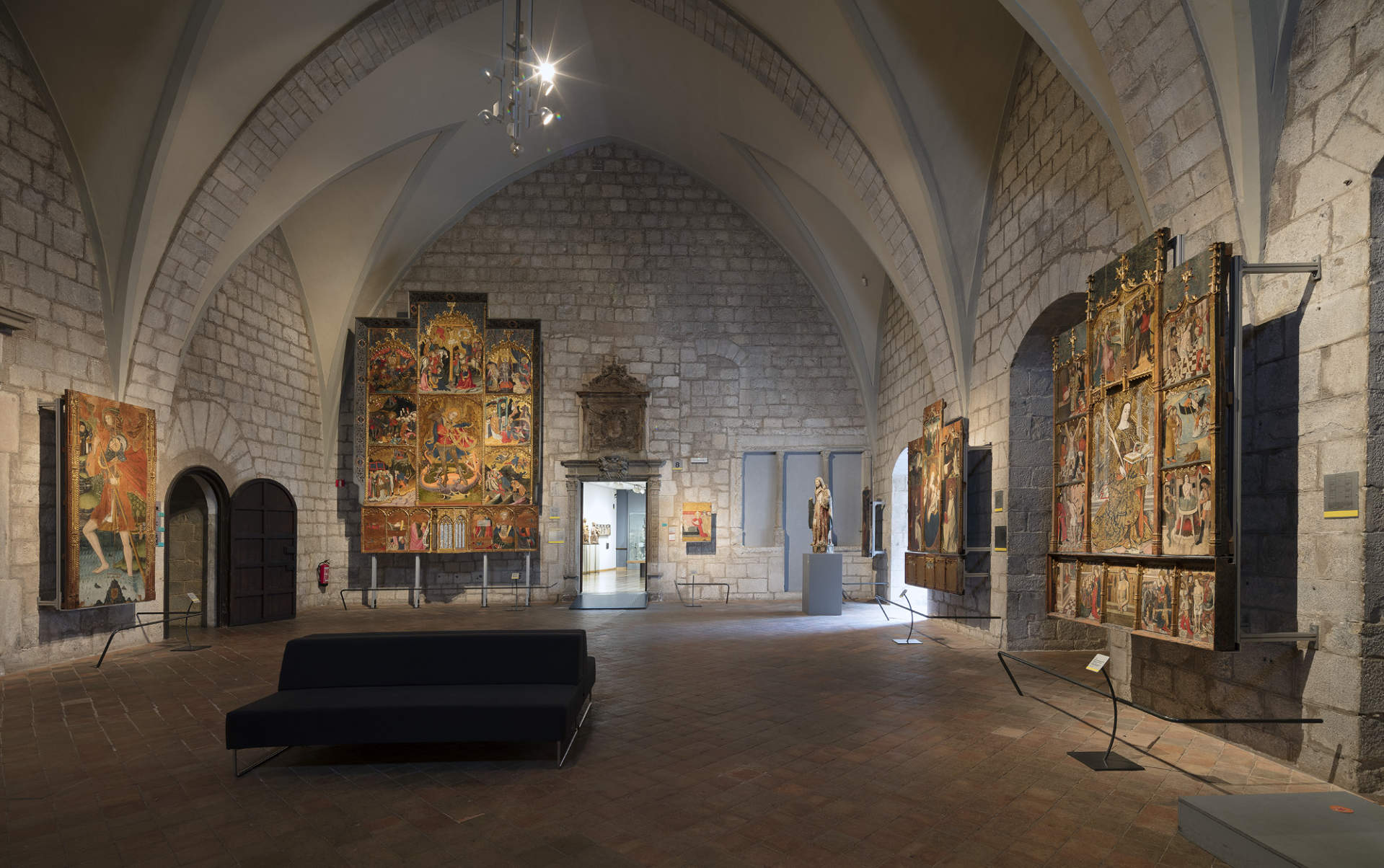
Girona has seven museums that display a valuable and diverse heritage, telling the story of history and art from ancient times to the present day, with activities for all audiences throughout the year.
The Jewish neighbourhood of Girona is one of the best preserved in Europe. This district located in the heart of the city is full of ancient remains from its Roman and Medieval past. Known popularly as the "Call", this area was home to 1000 inhabitants during the Middle Ages, making it one of the most important Jewish communities in Spain's history. As you explore the pretty narrow streets of the Jewish Quarter, the hometown of Nahmanides, the Medieval Kabbalistic philosopher, you'll visit the spots where the city's 3 synagogues were located, you will find out all about the customs and traditions of the Jewish people. You'll also visit the Museum of Jewish History (guided visit +tickets included) to learn about their way of life. Your guide will then lead you around the labyrinthine streets while explaining the history of the Expulsion of the Jews in 1492, an act that ended 600 years of coexistence. After this visit you'll have newfound knowledge of about the influence that the Jewish community left in Girona.
Meeting Point: PLaça Sant Feliu, beside "The River Cafe
The tour lasts: 2,5h
If your group is bigger, please contact us! We have special price for big groups!!
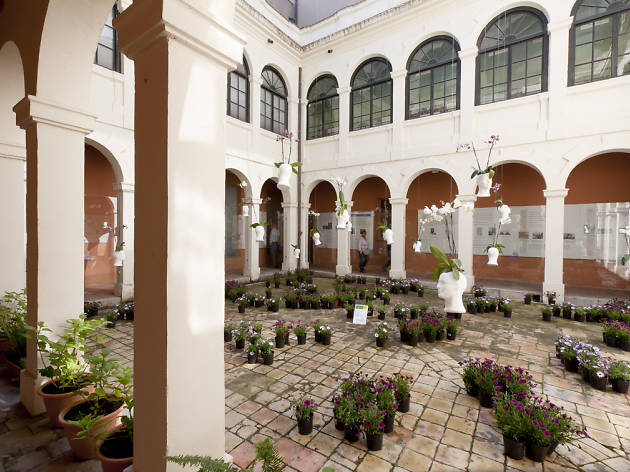
An emblematic building, the former 18th-century Capuchin friars’ convent of Sant Antoni, preserves remarkable spaces such as the cemetery, cloister, and cistern. The museum offers a journey through the history of Girona, from its Roman foundation to the present day, following a chronological route through Roman, medieval, modern, and contemporary Girona. This is complemented by several areas dedicated to Catalan traditions, such as La Faràndula, where visitors can see local festive imagery, and the space “The Cobla and the Sardana: Music and Dance in Girona.” The museum also hosts the area “Industrial Girona, a Pioneer City.”
The museum offers a wide range of activities, and temporary exhibitions are held in various spaces within the museum, including the exhibition hall, the coal store, the cistern, and the cellar.
The museum complex is made up of the main building and the Civil War area, the air-raid shelter of the Children’s Garden, which is part of the Network of Democratic Memory Sites. It also includes an additional site, the Gómez Agency, a beautifully designed Modernist-style establishment that once housed a notarial archive, a bank office, and a notary’s office.
Fuerza, 27
17004 Girona
Telephone: +34 972 222 229
Email: museuhistoria@ajgirona.cat
May to September: Tuesday to Saturday, 10:30 a.m. to 6:30 p.m.; Sundays and public holidays, 10:30 a.m. to 1:30 p.m.
October to April: Tuesday to Saturday, 10:30 a.m. to 5:30 p.m.; Sundays and public holidays, 10:30 a.m. to 1:30 p.m.
Closed: Mondays (except public holidays), January 1 and 6, and December 25 and 26.
Standard admission: €4
Reduced admission: €2
Free admission: children under 16, retirees, pensioners, ICOM members, students of the Official Language School of Girona, GEiEG members, teachers, group accompanying persons, and press representatives (with accreditation).
Free admission on the first Sunday of each month.
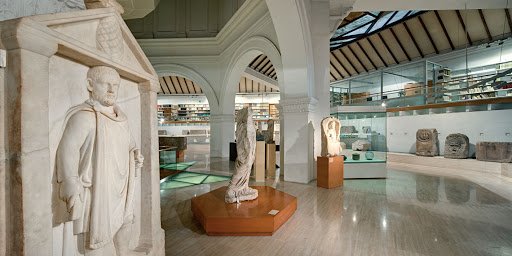
The museum has its origins in the Provincial Museum of Antiquities and Fine Arts, created in 1845 by the Provincial Commission of Monuments, and is therefore one of the oldest museums in Catalonia. In 1857, the museum was installed in the cloister of the Monastery of Sant Pere de Galligants, which had been abandoned by the Benedictine monastic community in 1836 following the disentailment laws. In 1860, construction work began on the upper cloister, which currently houses the permanent exhibition galleries, although the museum did not open to the public until late 1870.
Among the first archaeological materials to enter the museum were those from the excavations carried out by the Commission of Monuments in 1846 at Empúries, as well as Roman inscriptions and sculptures from the city of Gerunda (Girona), discovered during construction works in the city as it was recovering from the damage caused by the War of Independence.
During the Spanish Civil War (1936–1939), the museum first served as the headquarters of the Board of Culture and later of the Commission for Artistic and Archaeological Heritage of the Generalitat. After the war, it was transformed by the State into the Provincial Archaeological Museum, at the same time occupying the church of Sant Pere, which until then had been a parish church.
With the creation of the Museum of Art of Girona, in 1976 the art collections were transferred to the former Episcopal Palace, leaving the Galligants museum to specialize exclusively in archaeology.
In 1992, ownership was transferred to the Government of Catalonia, in accordance with the Catalan Museums Act, and it became part of the Museum of Archaeology of Catalonia. Today, the museum is located in two different spaces: the exhibition galleries and peripheral services are housed in the Monastery of Sant Pere de Galligants, while the central services and library are located in a building of the Department of Culture on Pedret Street in Girona.
Monastery of Sant Pere de Galligants
Santa Llúcia, 8
17007 Girona
Telephone: +34 972 202 632
Email: macgirona.cultura@gencat.cat
May to September: Tuesday to Saturday, 10 a.m. to 7 p.m.; Sundays and public holidays, 10 a.m. to 2 p.m.
October to April: Tuesday to Saturday, 10 a.m. to 6 p.m.; Sundays and public holidays, 10 a.m. to 2 p.m.
Closed: every Monday (including public holidays), December 25 and 26, and January 1 and 6.
Free admission: first Sunday of every month.
MAC 5×1 ticket – Pay for 1 ticket and visit all 5 sites!
Standard admission: €6
Reduced admission: €4 (people aged 65 or over, pensioners, holders of the Youth Card, students with an international student card, holders of large or single-parent family cards, non-tourist groups of 10 or more people with prior booking)
Tourist group admission: €4 (groups booking through tourism intermediaries or similar companies)
Other discounts and promotions: Cultural Card, Òmnium Cultural, AQVA Gerunda, and GEiEG card.
Free admission: first Sunday of the month; children under 16; unemployed people; accredited members of ICOM or ICOMOS; accredited AMC members; accredited tour guides; accredited teachers in formal education; accredited press professionals; people with a disability certificate (the accompanying person also has free admission if stated on the certificate); accredited foster families; student groups from the general education system; and members of the Catalan Society of Archaeology.
Open house days: Saint George’s Day (April 23), International Museum Day and Museum Night (May 18), National Day of Catalonia (September 11), Saint Narcissus Day (October 29), and European Heritage Days.
Group visits: Prior booking required by phone at +34 972 202 632 or by email at macgirona.cultura@gencat.cat.
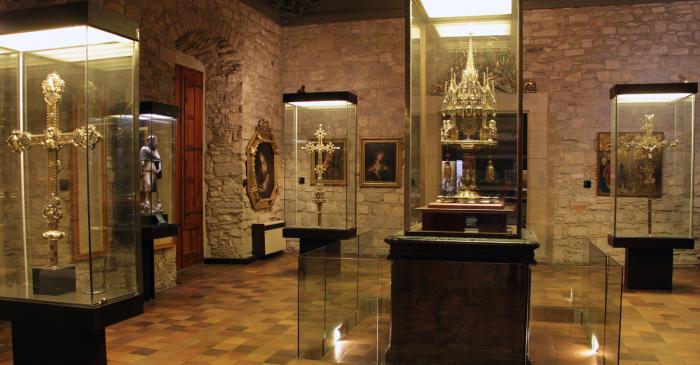
The Treasury Museum is located within the Cathedral of Girona and is the most visited museum in the city. It consists of three distinct spaces: the Gothic nave, the Romanesque cloister, and the Treasury Room, where several works and pieces of great artistic value are displayed, such as the Tapestry of Creation and the Beatus of Girona.
The Cathedral and the Basilica of Sant Feliu are buildings dedicated to the worship of the Catholic community. Their long history has endowed them with a heritage of great cultural value, which is made available to visitors. Admission to the Cathedral includes access to all three spaces—the nave, cloister, and treasury—as well as the Basilica of Sant Feliu.
Plaça de la Catedral
17004 Girona
Telephone: +34 972 427 189
Email: visites@catedraldegirona.org
The cultural visit includes the Nave, Treasury, Cloister, and the Basilica of Sant Feliu.
Individual admission: €7 (includes audioguide)
Reduced admission: €5 for retirees and students with valid accreditation (includes audioguide)
Free admission: children under 7 years of age, members of religious orders, and natives/residents of Girona
Groups: please consult the website.
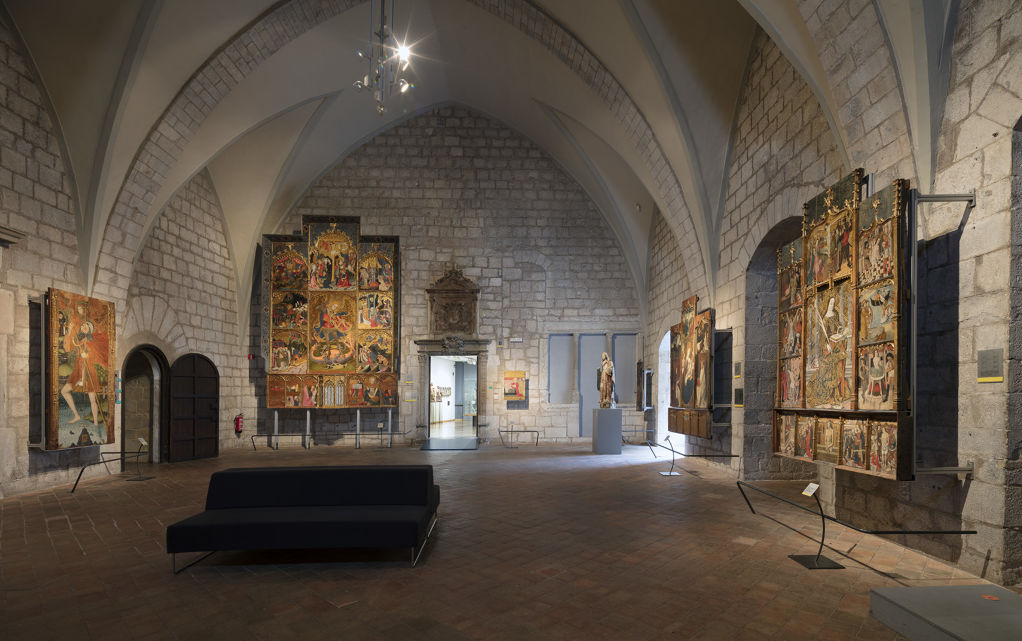
The Museum of Art of Girona was founded in 1976 through the merging of two remarkable collections. It is housed in the former Episcopal Palace, one of the most noble and spectacular buildings in Girona. The Museum of Art also manages the heritage complex of the Old Hospital of Santa Caterina, which contains one of the best-preserved hospital pharmacies in Europe.
Pujada de la Catedral, 12
17004 Girona
Telephone: +34 972 203 834
Email: museuart_girona.cultura@gencat.net
May to September: Monday to Friday, 10 a.m. to 7 p.m.; Sundays and public holidays, 10 a.m. to 2 p.m.
October to April: Monday to Friday, 10 a.m. to 6 p.m.; Sundays and public holidays, 10 a.m. to 2 p.m.
Closed on Mondays.
Standard admission: €6
Reduced admission: €4 (people aged 65 or over; pensioners; students with an international student card; holders of large or single-parent family cards; holders of the Youth Card; holders of the Club Girona Cultura card, with a 15% discount on the standard admission price)
Free admission: children under 16; Friends of the Museum of Art of Girona; unemployed visitors; visitors covered by agreements; foster families; accompanying guides of tourist groups; accredited tour guides; members of ICOM and ICOMOS; members of the Association of Museologists of Catalonia; people with a disability certificate and their accompanying person; accredited teachers in formal education; accredited press professionals; and free admission on the first Sunday of each month.
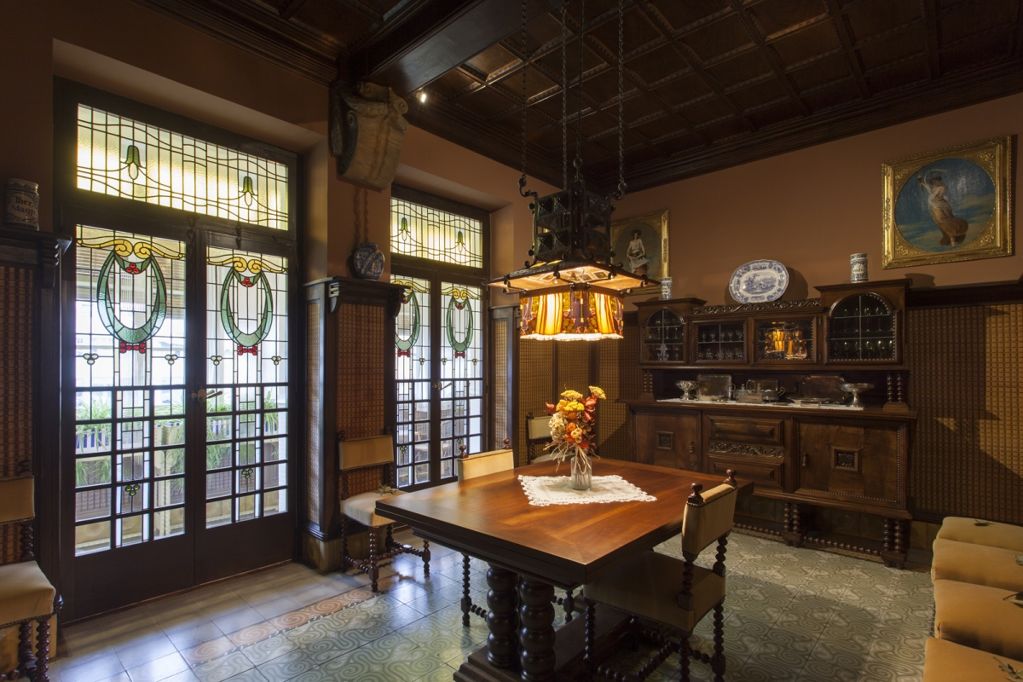
Casa Masó is the birthplace of Rafael Masó (1880–1935), one of the most important works of his architecture and the only one of Girona’s famous river houses open to the public. The house has been preserved with its original furniture and decoration from the Noucentista period, and it also offers unique views of the city.
The present-day Casa Masó is the result of the gradual union of four houses acquired by the family between the mid-19th and early 20th centuries. Its current appearance is similar to that following Rafael Masó’s last intervention in 1919. Since 2006, the house has been owned by the Girona City Council and is managed by the Rafael Masó Foundation.
Ballesteries, 29
17004 Girona
Telephone: +34 972 413 989
Email: info@rafaelmaso.org
Casa Masó is open to the public from Tuesday to Saturday, except on local and national public holidays.
Visits are guided only, in small groups of a maximum of 8 people, at scheduled times.
Advance booking is required by phone or email.
Standard admission: €6
Reduced admission: €3 (students, pensioners, retirees, and unemployed visitors with valid accreditation).
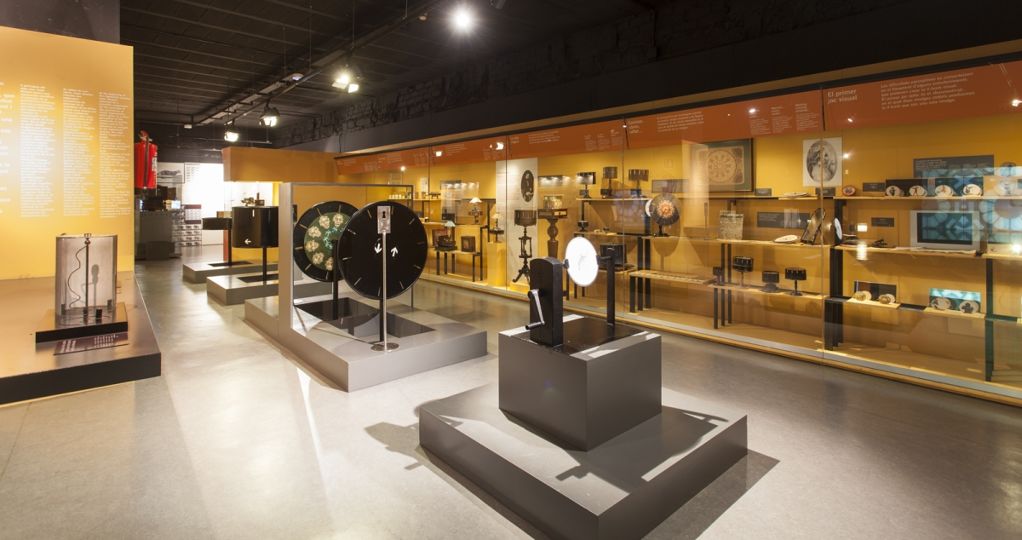
The Cinema Museum – Tomàs Mallol Collection is a permanent, non-profit institution open to the public as a space for scientific, cultural, and recreational participation, serving society and its development. Its mission is to promote the understanding and knowledge of the history of moving images and cinema through the conservation, research, interpretation, and permanent exhibition of the Tomàs Mallol Collection, as well as other collections or objects that may be acquired. It also fulfills this mission through the organization of activities and the provision of services that encourage interaction with visitors and museum users.
Acequia, 1
17001 Girona
Telephone: +34 972 412 777
Email: info@museudelcinema.cat
September to June: Tuesday to Saturday, 10 a.m. to 6 p.m.; Sundays and public holidays, 10 a.m. to 2 p.m.
July and August: Monday to Sunday, 10 a.m. to 7 p.m.; Sundays and public holidays, 10 a.m. to 2 p.m.
Standard admission: €6
Reduced admission: €4.80 (members of institutions with agreements with the Museum)
Reduced admission: €3 (students, retirees, unemployed visitors, groups of 15 people or more)
Free admission: children under 16, members of the Cinema Museum Actors’ Club, members of AMC and ICOM
Free admission on the first Sunday of each month.
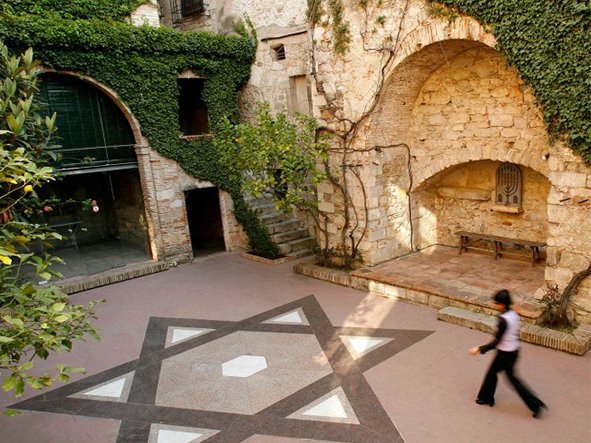
Inaugurated in 2000, it forms part of the Institute of Nahmanides Studies and was a very important commitment for the city, as the Call of Girona is one of the best-preserved Jewish quarters in medieval Europe.
The Museum’s main objective is to preserve and disseminate the history of the Jewish communities of Catalonia, which throughout the Middle Ages were an integral part of society and contributed decisively to the country’s historical development and its cultural and scientific growth. In most cases, the explanations along the museum route are illustrated with examples drawn from the history of Jewish Girona. These examples—documentary, archaeological, and iconographic—offer a general overview of Jewish ways of life in medieval Catalonia.
The Museum has eleven rooms forming a route that presents aspects of daily life, culture, and history of the Jewish communities in Catalonia and in Girona during the medieval period.
Calle de la Fuerza, 8
17004 Girona
Teléfono: 972 216 761
C/e: callgirona@ajgirona.cat
July and august: from monday to saturday to 10am to 8pm; sundays from 10am to 2pm.
Fom september to june: from Tuesday to saturday from 10am to 6pm; Monday and Saturday from 10am to 2pm.
Closed: January 1th and 6th, december 25th and 26th